
Lincoln County Release Records
Release from Lincoln County Jail means the sheriff's custody for that booking ended. It does not always mean the person went home. A person may post bond, receive a court order, finish a short sentence, receive credit for time served, begin probation, or have a charge dismissed. The jail may instead discharge the person to the Georgia Department of Corrections, another county, the U.S. Marshals Service, or immigration authorities. Each event removes the person from local custody, but only some place the person back in the community.
The live Lincoln County Sheriff roster is useful for current custody. Indexed roster information has shown a run date and fields such as jail ID, photo, name, charges, current disposition, and total bail. A release-date label has also appeared in indexed material for this roster style. The live page is not a reliable historic archive, however. No official separate 24-hour or 72-hour released list was located. When a name disappears, use the sheriff's statutory jail record.
A discharge is the formal end of custody under a particular order. A transfer is different. It ends custody at one facility while custody continues elsewhere. That distinction controls the next search.
How Lincoln County Releases Happen
The release authority is often more useful than the bare date. A bond release permits departure while the case continues. An own-recognizance release is a court-authorized release without a cash bond, usually with conditions. Time served means the sentence is satisfied by days already spent in confinement. Sentence expiration may reflect earned time allowed by Georgia law. Probation permits community supervision under a sentence, while parole is a state-prison release supervised by the Georgia State Board of Pardons and Paroles.
| Release event | What follows | Best confirmation |
|---|---|---|
| Bond or court order | The criminal case may continue | Sheriff discharge record and court order |
| Time served or sentence end | Local custody ends | Discharge record and sentencing file |
| Probation | Community supervision begins | Court probation order |
| Parole | State supervision follows prison | Parolee Database and GDC record |
| Agency transfer | Custody continues elsewhere | Transfer destination and receiving locator |
| Dismissal | A charge may end | Final court disposition |
A detainer is a request by another agency to hold or receive a person. Thus, a local discharge marked as a transfer, hold, or pickup should never be read as proof of community release.
Lincoln County Discharge Record Fields
Georgia law supplies a strong field list. O.C.G.A. § 42-4-7 requires the sheriff to keep a record of every person committed to the county jail. It includes the person's name, age, sex, race, commitment process, issuing court, charge, commitment date, discharge day, discharge order, and the court issuing that order. This official record is more durable than a changing web roster.
| Field | What it shows |
|---|---|
| Name and jail ID | Links the release to the correct booking |
| Commitment date | When jail custody began |
| Charge and court | Why the person was held and which court acted |
| Day of discharge | When Lincoln County custody ended |
| Discharge order | The authority for release or transfer |
| Destination, if kept | Whether another agency received the person |
Online fields may add booking date, arresting agency, bail, attorney, next court date, photo, or current disposition. Not every field is guaranteed online. Ask for the statutory commitment and discharge record when the roster is blank or ambiguous.
Request Lincoln County Release Records
A focused written request reduces delay. Send it to the Lincoln County Sheriff's Office or jail and identify the person by full name, date of birth if known, approximate booking date, charge, and court case number if known. Ask for the commitment and discharge record, including commitment date, discharge day, discharge authority, release time if maintained, and transfer destination. Written requests provide a clear account of what was sought.
- Check the roster and note its run date, visible booking details, and spelling of the name.
- Describe one booking as narrowly as possible.
- Cite the discharge fields required by O.C.G.A. § 42-4-7.
- Ask for electronic copies when practical and request a cost estimate.
- If material is withheld, ask the custodian to identify the applicable exemption.
Under O.C.G.A. § 50-18-71, an agency generally must produce records within a reasonable time not exceeding three business days, or explain when available records will be produced. The first quarter hour of search and retrieval is free. Letter or legal copies are generally capped at ten cents per page unless another law applies. Notice is required when an estimate exceeds $25, and prepayment may be required above $500.
Some material remains restricted. Pending investigative records can be withheld under specific provisions. Juvenile, sealed, protected, and record-restricted material may not appear through public channels. Georgia often uses the term record restriction rather than expungement. A restriction can change public visibility, but it does not authorize a public search around a court's limits.
Find Released Lincoln County Inmates
Start with the custody system, then follow the release trail. Refreshing one roster cannot resolve every case.
- Search the Lincoln County roster for a recent local booking. Record any disposition or release-date field.
- If the name is gone, request the sheriff's discharge record. Absence from a current roster is not proof that no booking occurred.
- Check the court disposition for bond, dismissal, sentence, probation, credit for time served, or transfer authority.
- For a state-prison case, use GDC Find an Offender and then the parole system if supervision followed.
- Use Georgia VINE for a specific-person custody change or alert, subject to the agency feed.
- Follow federal, USMS, or ICE channels only when the record indicates that custody type.
The dedicated Jail Releases: 24 Hours and Jail Releases: 72 Hours pages explain the recent-release fallback. Lincoln County has a live roster, but the research found no official rolling release archive for either window.
GDC Lincoln County Offender Search
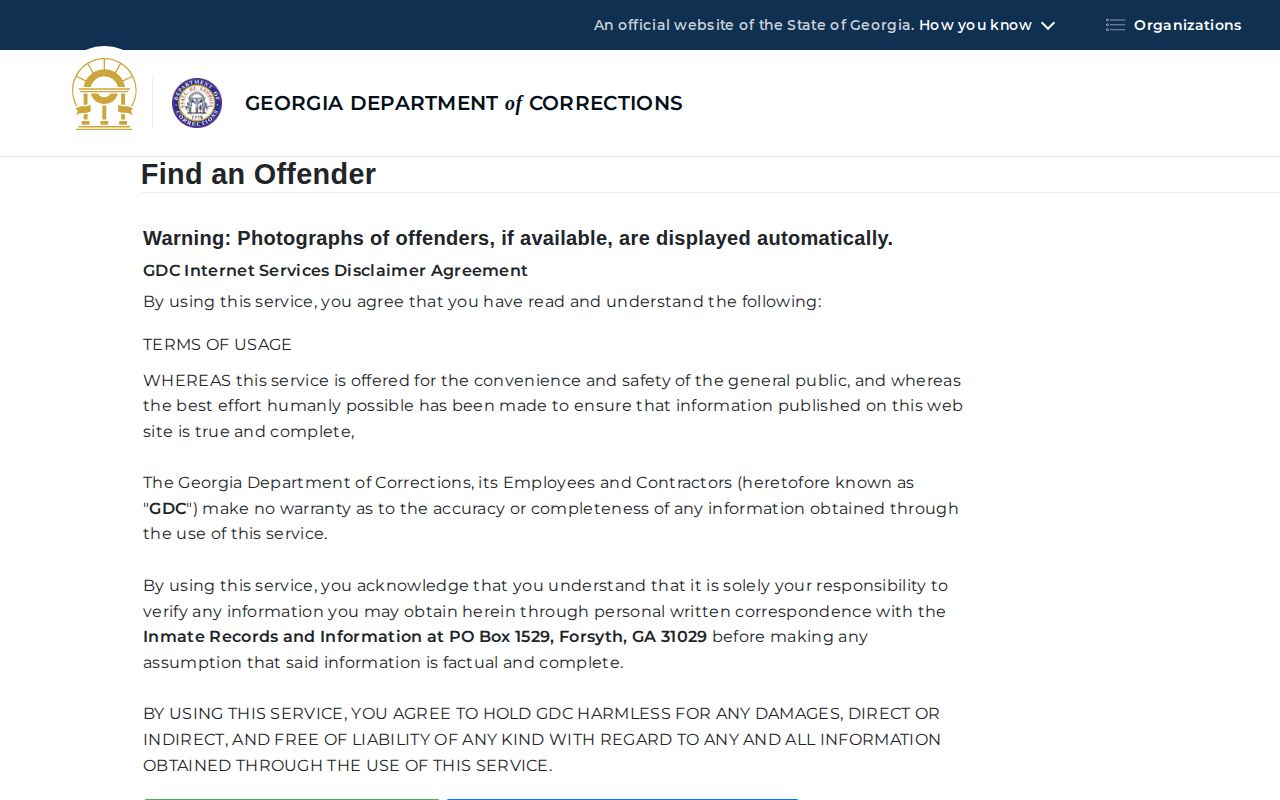
The Georgia Department of Corrections Find an Offender search applies to state custody, not a short county-only jail stay. Search by name or offender identifier, then compare age, race, sex, known county, offense, facility, and release-related fields. A released or discharged status can document the end of GDC custody. It may not explain the earlier day when Lincoln County transferred the person to the state.
GDC warns that its public information may not be complete and asks users to verify it by written correspondence with Inmate Records and Information, PO Box 1529, Forsyth, GA 31029. Photographs display when available. A photo or matching name alone is not enough to establish the correct person.
The official GDC form shows the search and verification context:
- Discharge
- The end of custody under the responsible agency's record.
- Parole
- Conditional release from state prison under Board supervision.
- Probation
- Court-ordered community supervision, which may follow a jail release.
- Time served
- Credit for custody already completed toward the sentence.
Lincoln County Court Release Records
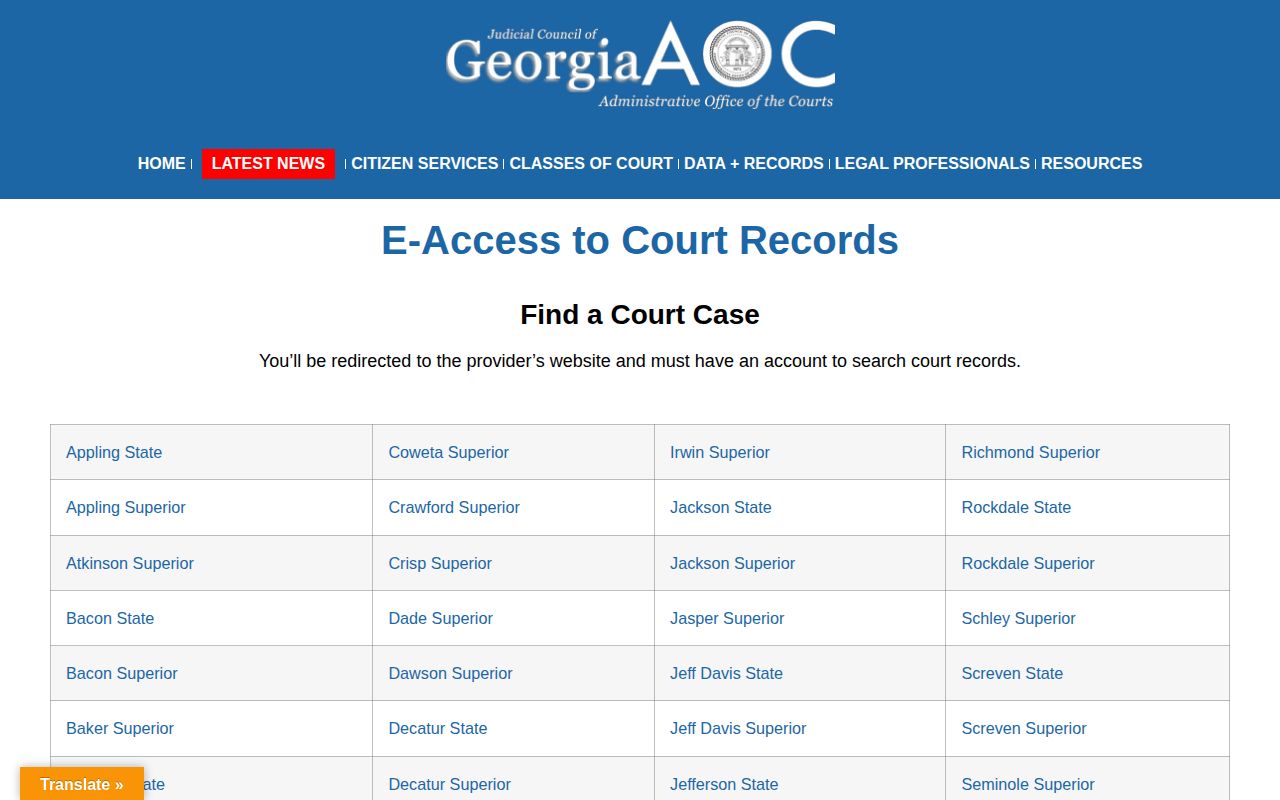
Lincoln County does not offer one simple court docket through the sources captured in research. The Georgia Courts e-access page sends users to provider websites, and an account may be required. Start there, but use the Lincoln County Clerk of Superior Court when a criminal disposition is unavailable online or a certified copy is needed.
GSCCCA lists the Clerk of Superior Court at 210 Humphrey Street, PO Box 340, Lincolnton, GA 30817, phone (706) 359-5505. Court files can preserve bond orders, dismissals, sentencing orders, probation terms, sentence credit, revocation orders, and transfer authority after a jail entry disappears.
The captured state e-access page illustrates why the search may move to another provider:
Correct Lincoln County Release Errors
Send a correction to the custodian that owns the disputed record. The sheriff controls the jail commitment and discharge entry. The clerk or court controls dispositions, sentence orders, and filed credit. GDC controls state offender data. The State Board of Pardons and Paroles controls parole decisions and supervision status.
Attach enough detail to distinguish the booking or state record, identify the precise field believed to be wrong, and provide the official order or document that supports the correction. GDC's own disclaimer directs verification requests to Inmate Records and Information in Forsyth. A court discrepancy should go to the clerk rather than being presented as a jail-roster issue.
Georgia Mugshot Removal Rights
Georgia treats booking photos differently from the basic discharge record. O.C.G.A. § 35-1-19 requires a compliance affirmation for a booking-photo request and restricts release when a photo may go to a publication or website that charges for removal. A request for the discharge day and order should therefore remain separate from a photo request.
The Georgia Attorney General's consumer page explains that O.C.G.A. § 10-1-393.5 provides eight circumstances in which a commercial mugshot website must remove an image without charge within 30 days after a written request. That process corrects commercial display. It does not change the official court or jail record, and a commercial image is not reliable proof of present custody or release.
Lincoln County Transfer Searches
Georgia VINE can report a custody-status change and provide release alerts when the agency feed contains the record. Use VINELink Inmate Search for a named person, then confirm the release reason through the jail or court. A missing VINE result is not proof that no Lincoln County booking occurred.
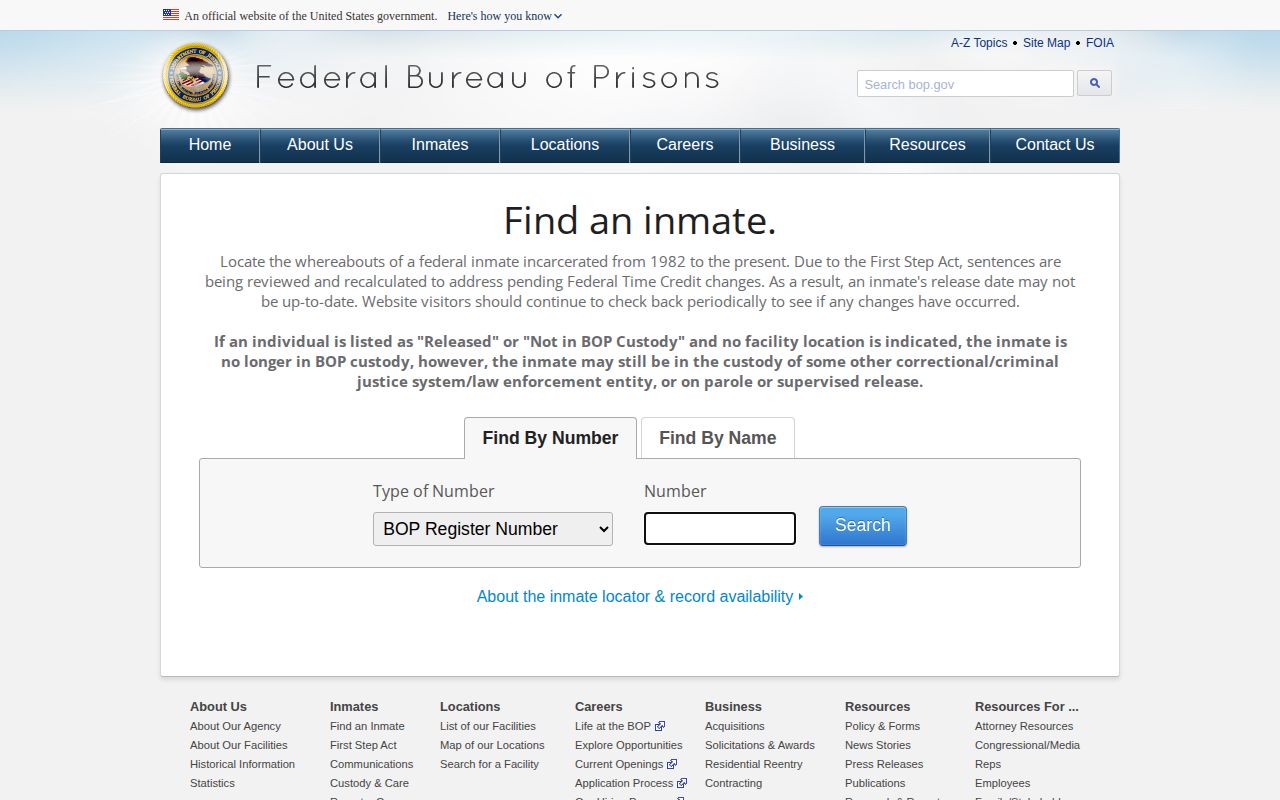
For a federal sentence, the BOP Inmate Locator covers federal inmates from 1982 onward. “Released” or “Not in BOP Custody” means no BOP facility is shown, but another authority or supervision may still apply. A USMS pickup is a transfer into federal pretrial or court-ordered custody. An ICE detainer likewise can move a person from the county jail into immigration detention. Use ICE's detainee locator only when the facts point to immigration custody.
The BOP locator is shown below from its official source:
Reliable Lincoln County Release Sources
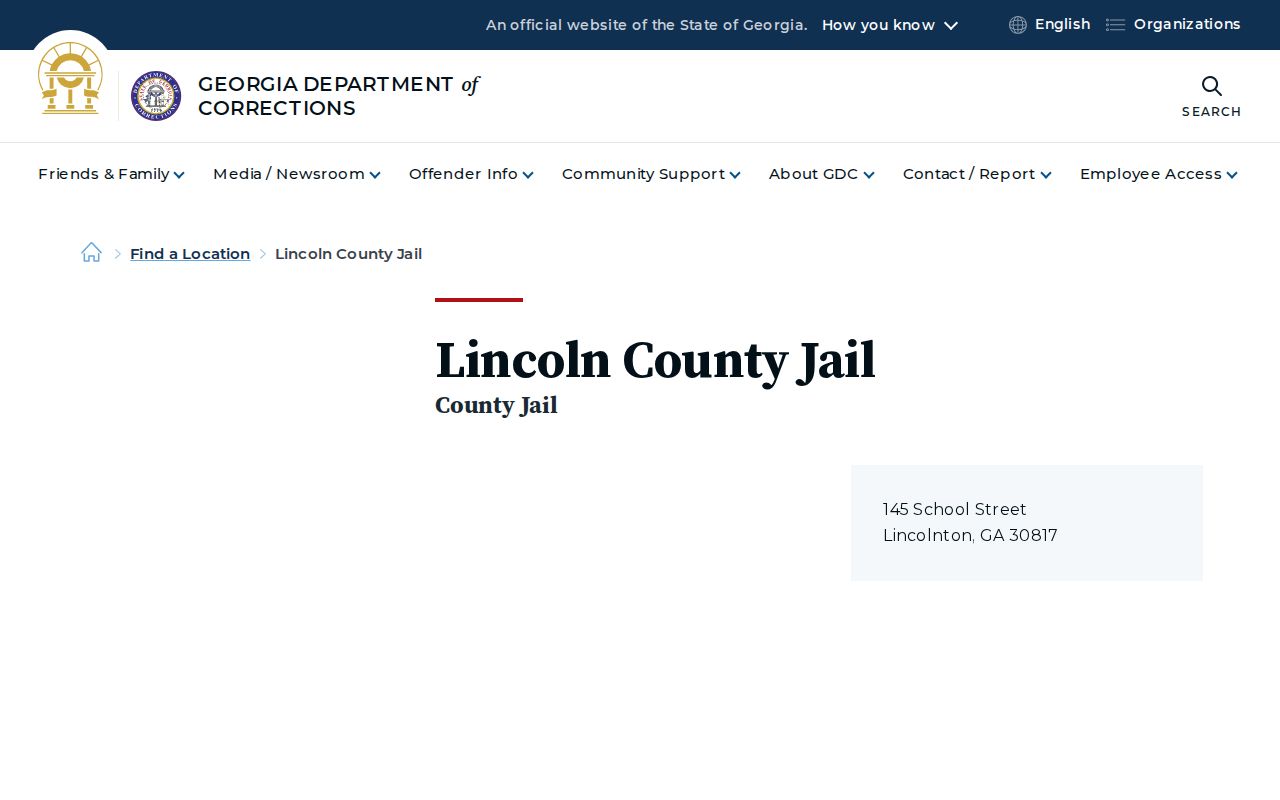
Lincoln County's web trail can produce wrong-state matches and outdated private jail directories. The county splash page has linked to an older government domain, while the older sheriff page was not consistently available during capture. Prefer stable official records. The GDC facility listing confirms the jail's address and phone, and GSCCCA confirms the clerk's contact details.
The GDC facility source appears below:
Released or Still in Custody
A live roster and a release record describe different moments. The Lincoln County roster is designed to show people presently listed at the jail. The sheriff's commitment and discharge record preserves the day local custody ended and the authority for that action. GDC addresses state custody. The court file preserves the legal events in the case. Choosing the source by status avoids a common error: treating a missing current-roster entry as a complete account of release.
| Person's likely status | Start here | What the source can establish |
|---|---|---|
| Currently in Lincoln County Jail | Sheriff roster | Current listing, charges, disposition, and bail fields |
| Released from the county jail | Sheriff discharge record | Discharge day and release authority |
| Case continued after release | Lincoln County court file | Bond, disposition, sentence, probation, or later orders |
| Transferred to state prison | GDC Find an Offender | State custody, facility, and release-related status |
| Released on state parole | Parolee Database | Post-release parole status |
| Federal sentence | BOP Inmate Locator | BOP custody or federal release status |
Sometimes two sources are both correct. The county record can show a discharge to GDC while GDC shows the person in state custody. Later, GDC can show discharge while the Parole Board shows active supervision. Read each entry as an event in a sequence, not as a competing answer.
Lincoln County Release Date Changes
A date associated with release can change because different rules apply to different custody systems. For a county sentence, O.C.G.A. § 42-4-7 permits earned-time allowances for certain inmates based on institutional conduct. O.C.G.A. § 17-10-11 requires credit for days already spent in confinement for the offense. A judge can also modify the controlling order. A new warrant, detainer, or transfer can prevent a planned departure from becoming a community release.
State prison dates require separate care. GDC may publish release-related fields, while the Parole Board may publish a Tentative Parole Month. A TPM is the month for final parole review, not a promise that the person will leave prison. Conduct, required programs, a residence plan, a detainer, or a later Board decision can move or cancel that timing. The Projected Release page explains why one statewide percentage cannot accurately predict every Georgia case.
Use the date attached to the official event. A jail discharge day answers when county custody ended. A court order supplies sentence credit or legal authority. A GDC date belongs to state custody. A parole date belongs to the Board's final action. Combining those fields without their labels can create a false timeline.
Lincoln County Release Follow-Up
After confirming community release, the next public record depends on the case. A pending charge remains in the court file even after bond. Probation terms come from the sentencing court and the responsible supervision office. Parole status comes from the State Board, not the county jail. A qualifying registrant may appear in the GBI Georgia Sex Offender Registry, but that registry covers only offenses subject to registration and is not a list of all released people.
Keep the booking identity separate from the final case outcome. An arrest charge is an allegation at booking. A current disposition field may be temporary. The final court record can later show dismissal, acquittal, plea, sentence, or another result. When reconnecting with a person or following a known legal matter, compare name, date of birth when lawfully available, booking date, case number, and court. Do not rely on a photo or shared name alone.
Release alerts also serve a different job from historical records. Georgia VINE can notify a registered user of a reported custody change. It does not replace a certified court order, a sheriff discharge entry, or a GDC verification letter. For a newly reported event, preserve the alert time, then confirm the underlying record with the agency that supplied or owns it.
Lincoln County Detention Facility
Lincoln County Jail at 145 School Street in Lincolnton is the county's local booking and release facility. It holds local arrestees, people awaiting court, short local sentences, and people awaiting transfer. Call (706) 359-1860 for facility information. The sheriff's jail record confirms local discharge; GDC, court, parole, federal, or ICE records take over when another system receives the person.